 11
11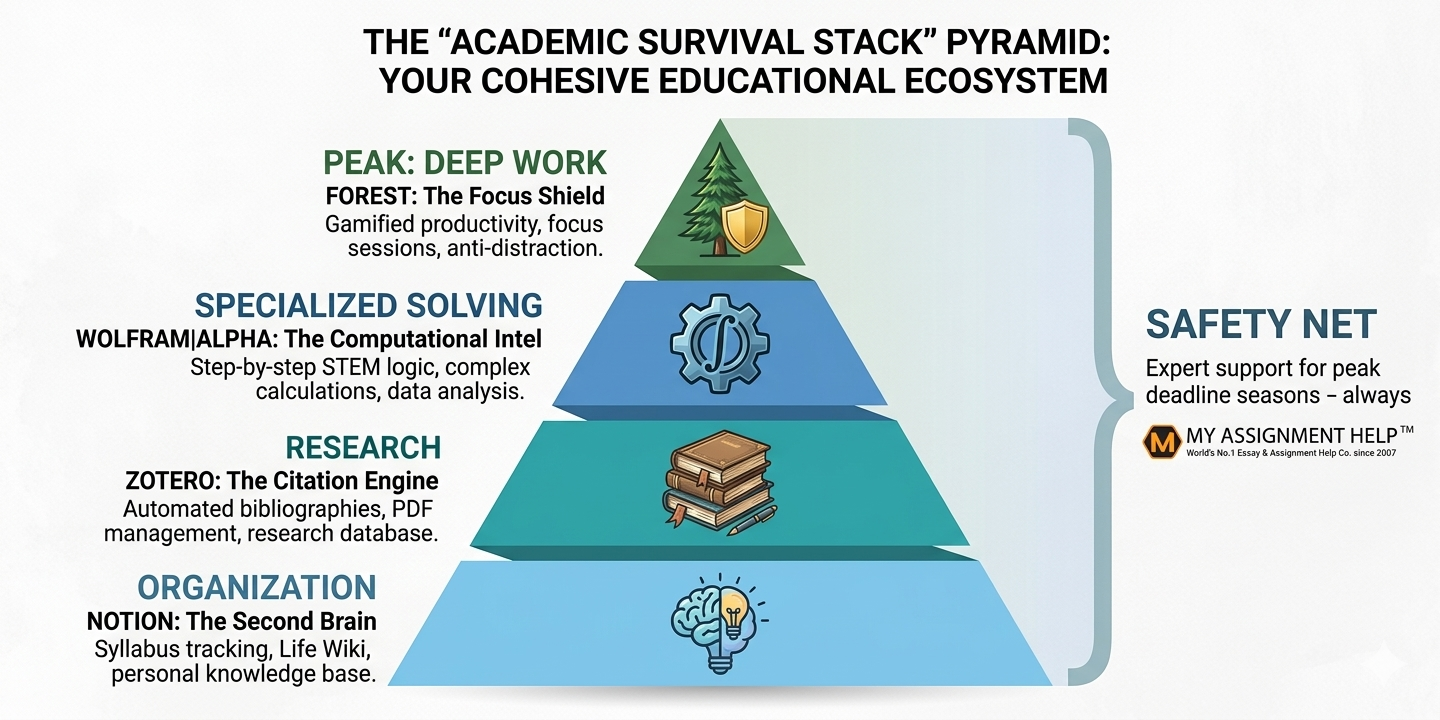
The academic landscape at Canada’s premier institutions—McGill University in Montreal and the University of British Columbia (UBC) in Vancouver—is notoriously rigorous. Often referred to as part of Canada’s “Ivy League,” these universities demand a level of intellectual stamina that goes beyond simple rote memorization. In 2026, the “work harder, not smarter” mantra has been officially replaced by a data-driven approach to learning. Success now hinges on your digital toolkit and how effectively you can automate the mundane to focus on the complex.
To thrive in high-intensity environments like the Desautels Faculty of Management or UBC’s Sauder School of Business, students must leverage technology that streamlines research, organizes chaotic schedules, and refines technical output. However, even the most sophisticated software has its limits when deadlines converge. During those peak mid-semester weeks when three exams and a major term paper collide, many students find it beneficial to hire professionals to write my assignment. This strategic move allows them to focus on core conceptual learning and exam preparation rather than losing hours to formatting and bibliography management.
While external support is a vital safety net, day-to-day excellence is built on a foundation of the right software. Below, we dive deep into the top five digital tools specifically curated for the unique academic demands and regional contexts of McGill and UBC scholars.
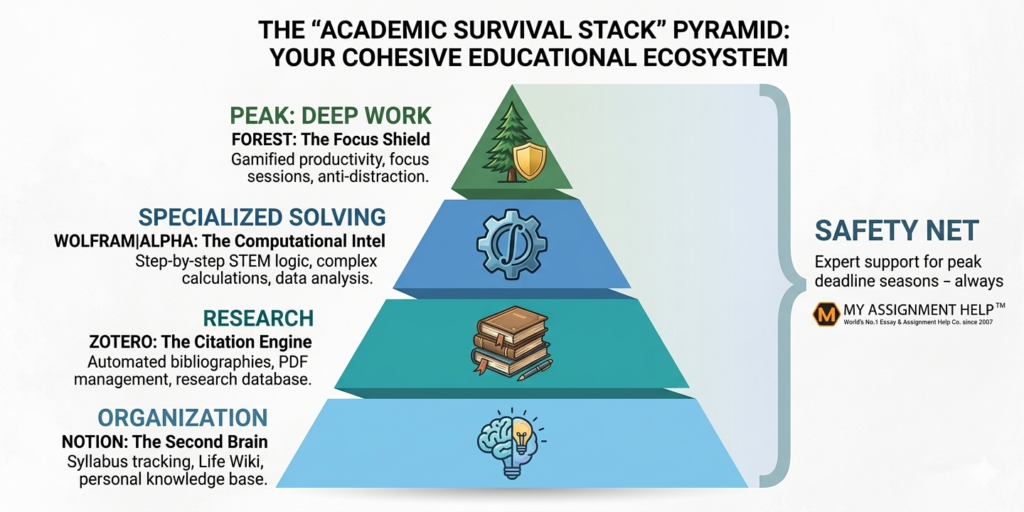
For UBC students juggling extracurriculars in the AMS (Alma Mater Society) and a heavy course load in Point Grey, Notion is the gold standard for organization. It is no longer just a note-taking app; it is a workspace where you can build a comprehensive “Life Wiki.”
McGill University is world-renowned for its research output and high citation impact. If you are writing a thesis in the Faculty of Arts or pursuing a BSc in Science, manual citations are a recipe for academic integrity violations. Zotero is an open-source tool that senses content in your web browser and adds it to your personal library with a single click.
For UBC Engineering students at the Applied Science faculty or McGill Physics students, Wolfram|Alpha is the “computational intelligence” engine of choice. Unlike standard search engines, it doesn’t just point you to a webpage; it computes answers based on a massive internal database of expert-level knowledge.
Visual Guide: The STEM Solver Framework
The McLennan-Redpath Library at McGill and the I.K. Barber Learning Centre at UBC are stunning architectural spaces, but they are also social hubs where focus can easily fracture. Forest is a productivity app designed to gamify your focus. When you need to study, you “plant” a virtual tree. If you check your phone before the timer is up, your tree withers and dies.
Even with a perfect stack of software, the sheer volume of work required to maintain “High Distinctions” for graduate school applications—especially for competitive MD or JD programs in Canada—can become mathematically impossible to manage. When the workload exceeds the available hours, seeking professional guidance is a sign of effective project management.
If you find yourself overwhelmed by a complex case study or a 5,000-word literature review, you can do my homework through a dashboard designed to match you with specialists who understand the specific grading rubrics of U15 universities. This service ensures that your submissions are not only technically sound but also adhere to the strict stylistic expectations of North American academia.
| Strategy | Tool | Expected Outcome |
| Organization | Notion | Reduction in “administrative stress” and better deadline tracking. |
| Research | Zotero | 100% accuracy in bibliographies and faster literature reviews. |
| Problem Solving | Wolfram | Alpha |
| Focus | Forest | Increased “Deep Work” sessions and reduced screen time. |
| Delegation | MyAssignmentHelp | Maintaining GPA during high-stress exam seasons. |
Aidan Thorne
Senior Academic Strategist at MyAssignmentHelp
Aidan Thorne is a veteran academic consultant with a focus on North American higher education systems. With a background in SEO-driven content strategy and academic assistance, Aidan has helped thousands of students at McGill, UBC, and the University of Toronto optimize their study habits. His work emphasizes the integration of AI-resistant, data-driven writing techniques that uphold the highest standards of E-E-A-T.
A: Yes. Both Notion and Zotero can be used alongside Canvas. You can export your Canvas calendar into Notion to ensure all your assignment deadlines are centralized.
A: While McGill doesn’t directly provide Notion Pro, they offer the full Microsoft 365 suite, which integrates beautifully with the tools listed above. Zotero is free for everyone as an open-source platform.
A: Digital tools like Zotero and Wolfram|Alpha are meant for research and computation, not for generating prose. To maintain E-E-A-T standards, always write your own analysis based on the data these tools provide. If you are struggling with the writing process, professional services can provide human-written samples to guide your own work.
A: Yes, many students in high-pressure programs use academic support services for proofreading, editing, and understanding complex topics to ensure their work meets the competitive standards of the BC job market.