 11
11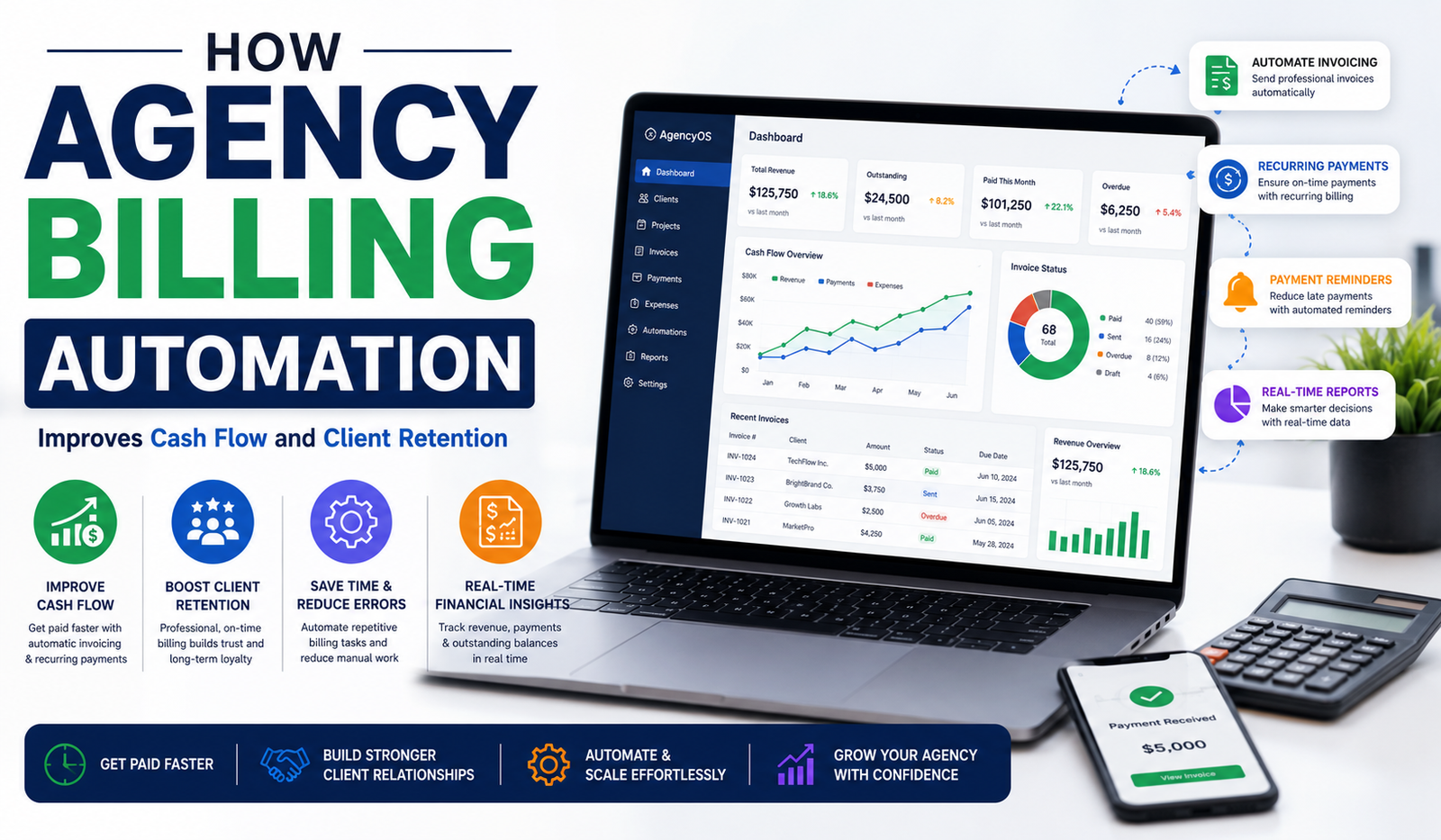
For most digital agencies, winning new clients is only half the battle. Sustainable growth depends on maintaining healthy cash flow and building long-term client relationships. Unfortunately, many agencies still rely on manual invoicing, spreadsheets, and disconnected accounting processes that consume valuable time and introduce unnecessary errors.
Late invoices, forgotten payments, inconsistent billing cycles, and manual follow-ups don’t just slow revenue they also create friction in the client experience.
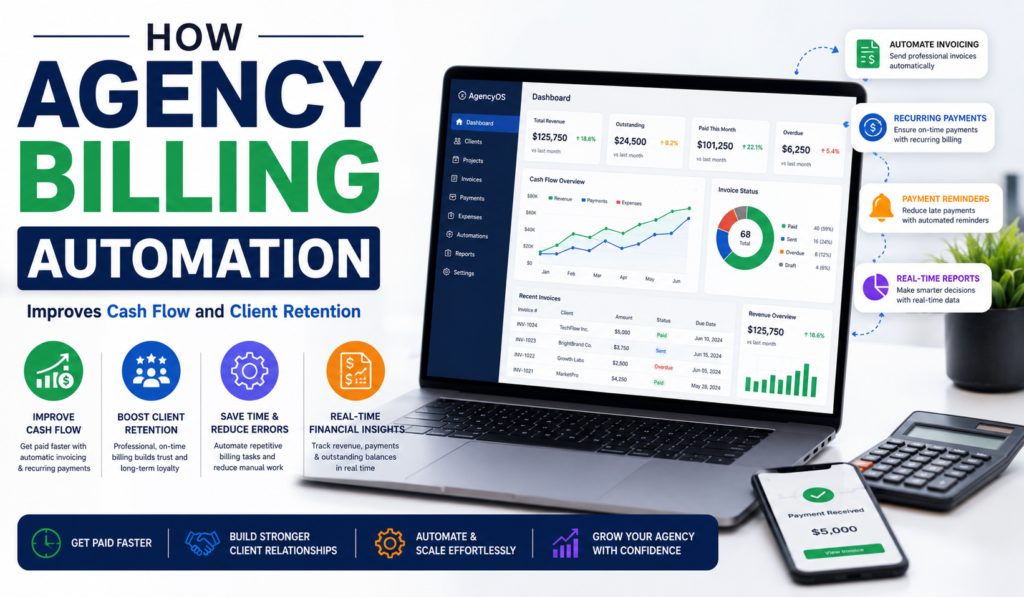
This is where agency billing software becomes a strategic advantage rather than just an accounting tool. By automating recurring invoices, payment tracking, reminders, and billing workflows, agencies can spend less time managing finances and more time delivering exceptional client results.
Whether you’re an SEO agency, marketing consultancy, web development company, or creative studio, billing automation helps establish predictable revenue, improve operational efficiency, and strengthen client trust.
Revenue may indicate business growth, but cash flow determines whether an agency can operate smoothly from month to month.
Even profitable agencies can face financial pressure if client payments are delayed or invoices aren’t managed efficiently.
Healthy cash flow allows agencies to:
When cash flow becomes unpredictable, agency owners often spend more time chasing payments than focusing on business development and client success.
Many agencies underestimate how much time is lost through manual billing processes.
Creating invoices individually, checking payment status, sending reminder emails, and updating spreadsheets may seem manageable with a small client base. However, as the business grows, these repetitive tasks become increasingly difficult to manage.
Manual billing often leads to:
Invoices sent days or weeks after project completion delay incoming revenue and extend payment cycles unnecessarily.
Incorrect invoice amounts, duplicate invoices, missing tax details, or outdated client information can create confusion and require additional administrative work.
Busy agency teams may forget to remind clients about overdue invoices, resulting in longer payment delays.
Instead of focusing on client strategy, project delivery, or business growth, account managers spend valuable hours handling financial administration.
These inefficiencies accumulate over time, reducing profitability and slowing agency growth.
Billing automation uses software to manage recurring financial processes with minimal manual effort.
Instead of generating invoices manually each month, agencies can automate routine tasks such as:
Automation ensures billing processes remain consistent regardless of how many clients the agency serves.
One of the biggest advantages of automated billing is the ability to shorten the time between completing work and receiving payment.
Invoices can be generated automatically according to predefined schedules rather than waiting for manual preparation.
Clients receive invoices immediately, allowing payment cycles to begin sooner.
Recurring services such as SEO, PPC management, website maintenance, content marketing, and social media management benefit from standardized monthly billing.
Consistency makes it easier for clients to anticipate payments while giving agencies more predictable monthly revenue.
Many late payments aren’t intentional they simply result from overlooked invoices or busy finance teams.
Automated reminders help clients remember upcoming or overdue payments without requiring account managers to send repeated follow-up emails.
This reduces outstanding receivables while improving collection efficiency.
Professional financial processes influence how clients perceive an agency.
Receiving accurate invoices on time, with clear payment information and organized billing history, creates confidence in the agency’s operations.
Clients appreciate businesses that make financial interactions straightforward and transparent.
Instead of emailing back and forth to locate previous invoices or verify payment status, they benefit from a structured billing experience that saves time for everyone involved.
Agencies that modernize their billing process often discover that operational improvements enhance the overall customer experience not just financial performance.
Billing isn’t simply an accounting function.
It’s one of the most consistent touchpoints between an agency and its clients.
Every invoice reflects the agency’s professionalism, attention to detail, and operational maturity.
When billing is organized, timely, and transparent, clients gain greater confidence in the agency’s ability to manage larger projects and long-term partnerships.
For agencies looking to simplify invoicing, automate recurring billing, and improve payment tracking within a centralized workflow, modern agency management platforms that include integrated billing capabilities can reduce manual administration while supporting healthier cash flow and stronger client relationships.
Client retention isn’t driven solely by campaign performance or creative work. Every interaction a client has with your agency contributes to their overall experience—including invoicing and payment processes.
An organized billing system removes friction from the relationship and reinforces trust throughout the client lifecycle.
Clients appreciate consistency.
Receiving invoices on the same date every billing cycle, with clear payment terms and accurate service details, demonstrates professionalism and reliability.
Predictable financial processes reduce confusion and help clients manage their own budgets more effectively.
Manual invoicing increases the likelihood of errors such as:
Even small mistakes can damage client confidence and delay payments.
Automated billing minimizes these risks by using standardized templates and predefined pricing structures, creating greater accuracy across every invoice.
The easier it is for clients to pay, the faster agencies receive revenue.
Modern billing systems help streamline payment workflows by organizing invoices, payment history, and outstanding balances in one location.
Reducing unnecessary steps encourages faster payments while improving the overall customer experience.
Trust is built through consistent experiences.
When clients know invoices will arrive on time, contain accurate information, and remain easily accessible, financial interactions become routine rather than stressful.
This reliability reinforces confidence in the agency and supports long-term partnerships.
Many agencies generate recurring monthly revenue from services such as:
Recurring billing automation eliminates repetitive manual work by generating invoices according to predefined schedules.
As the client base grows, agencies can continue scaling without increasing administrative workload at the same rate.
Finance teams, account managers, and agency owners often spend hours every month preparing invoices, tracking payments, and responding to billing questions.
Automation reduces repetitive administrative tasks, allowing teams to focus on higher-value activities such as client strategy, campaign optimization, and business development.
Operational efficiency improves across the organization not just within finance.
Healthy agency growth depends on understanding financial performance.
Automated billing systems typically provide a clearer overview of:
Having access to organized financial data helps agency owners make more informed decisions about hiring, pricing, service expansion, and investment.
Many agencies experience cash flow challenges not because demand is low, but because their billing processes are inconsistent.
Some of the most common mistakes include:
Every delay in issuing an invoice postpones payment and extends the cash conversion cycle.
Managing invoices across spreadsheets, accounting software, email, and payment platforms increases administrative complexity and creates opportunities for errors.
Different payment schedules for similar services can confuse clients and complicate financial forecasting.
Without automated reminders, overdue invoices may remain unpaid simply because they were overlooked.
When billing information is scattered across multiple systems, agency owners struggle to monitor revenue performance and identify payment trends.
Addressing these issues helps agencies create a stronger financial foundation while improving the client experience.
| Area | Manual Billing | Billing Automation |
| Invoice creation | Created individually | Scheduled automatically |
| Payment reminders | Sent manually | Automated reminders |
| Recurring invoices | Repeated every cycle | Generated automatically |
| Payment tracking | Spreadsheet updates | Centralized dashboard |
| Administrative workload | High | Significantly reduced |
| Error risk | Higher | Lower through standardized workflows |
| Financial visibility | Fragmented | Real-time reporting |
For agencies managing recurring client relationships, automation creates greater consistency while reducing repetitive administrative work.
Digital agencies are becoming more data-driven, process-oriented, and scalable. While marketing strategies continue to evolve, operational efficiency has become just as important as delivering measurable client results.
Billing is no longer simply about sending invoices. It plays a central role in financial planning, forecasting, client experience, and business growth.
As agencies adopt automation across project management, reporting, customer support, and client communication, manual billing increasingly becomes an operational bottleneck.
Automating financial workflows helps agencies:
For agencies operating on recurring revenue models, these improvements compound over time, creating healthier cash flow and greater operational stability.
Successful billing automation starts with well-defined financial processes rather than simply introducing new software.
Create clear service packages with consistent pricing and billing cycles.
Standardized pricing reduces invoicing complexity while making services easier for clients to understand.
Every invoice should clearly communicate:
Transparency helps reduce misunderstandings and unnecessary payment delays.
Monthly retainers, maintenance plans, SEO campaigns, PPC management, and ongoing marketing services are ideal candidates for recurring billing.
Automating these invoices saves time while ensuring clients receive them consistently.
Automation doesn’t eliminate the need for financial oversight.
Review aging invoices regularly to identify payment trends and resolve potential issues before they affect cash flow.
The greatest efficiency comes from connecting billing with other operational workflows.
When invoices, projects, client records, communication, and reporting are managed within a centralized platform, teams spend less time switching between disconnected systems and more time delivering value to clients.
For agencies looking to streamline invoicing alongside client management and service delivery, integrated billing solutions within agency management platforms can simplify day-to-day operations while improving financial visibility.
Not all billing software is built for agencies.
General accounting tools often focus on bookkeeping, while agencies require workflows that support recurring services, client communication, project-based work, and ongoing account management.
When evaluating a billing solution, consider whether it offers:
A platform that connects billing with the broader agency workflow can reduce administrative effort while creating a more seamless experience for both clients and internal teams.
Agency billing software helps service businesses automate invoicing, recurring billing, payment tracking, reminders, and financial reporting, reducing manual work while improving cash flow.
Automation generates invoices on time, sends payment reminders automatically, and helps agencies monitor outstanding balances more effectively, reducing payment delays and improving revenue predictability.
Yes. Small agencies, consultants, and freelancers often save significant administrative time while creating a more professional billing experience for their clients.
Integration helps agencies connect client records, projects, communication, invoices, and payments within one workflow, reducing duplicate work and improving operational visibility.
Professional, accurate, and timely invoicing builds trust. Clients appreciate transparent financial processes, making them more likely to continue long-term partnerships with the agency.
Strong agencies don’t grow solely because they acquire more clients—they grow because they build systems that support consistent, scalable operations.
Billing automation is one of those foundational systems. By eliminating repetitive manual tasks, reducing payment delays, improving financial visibility, and creating a smoother client experience, agencies can strengthen both cash flow and long-term client relationships.
Rather than treating invoicing as a back-office task, successful agencies view billing as an important part of the customer journey. Every accurate invoice, timely reminder, and transparent payment process reinforces professionalism and trust.
As service businesses continue to scale, investing in automated billing isn’t just about saving time. It’s about building a more resilient, efficient, and client-focused agency that is prepared for sustainable growth in an increasingly competitive market.